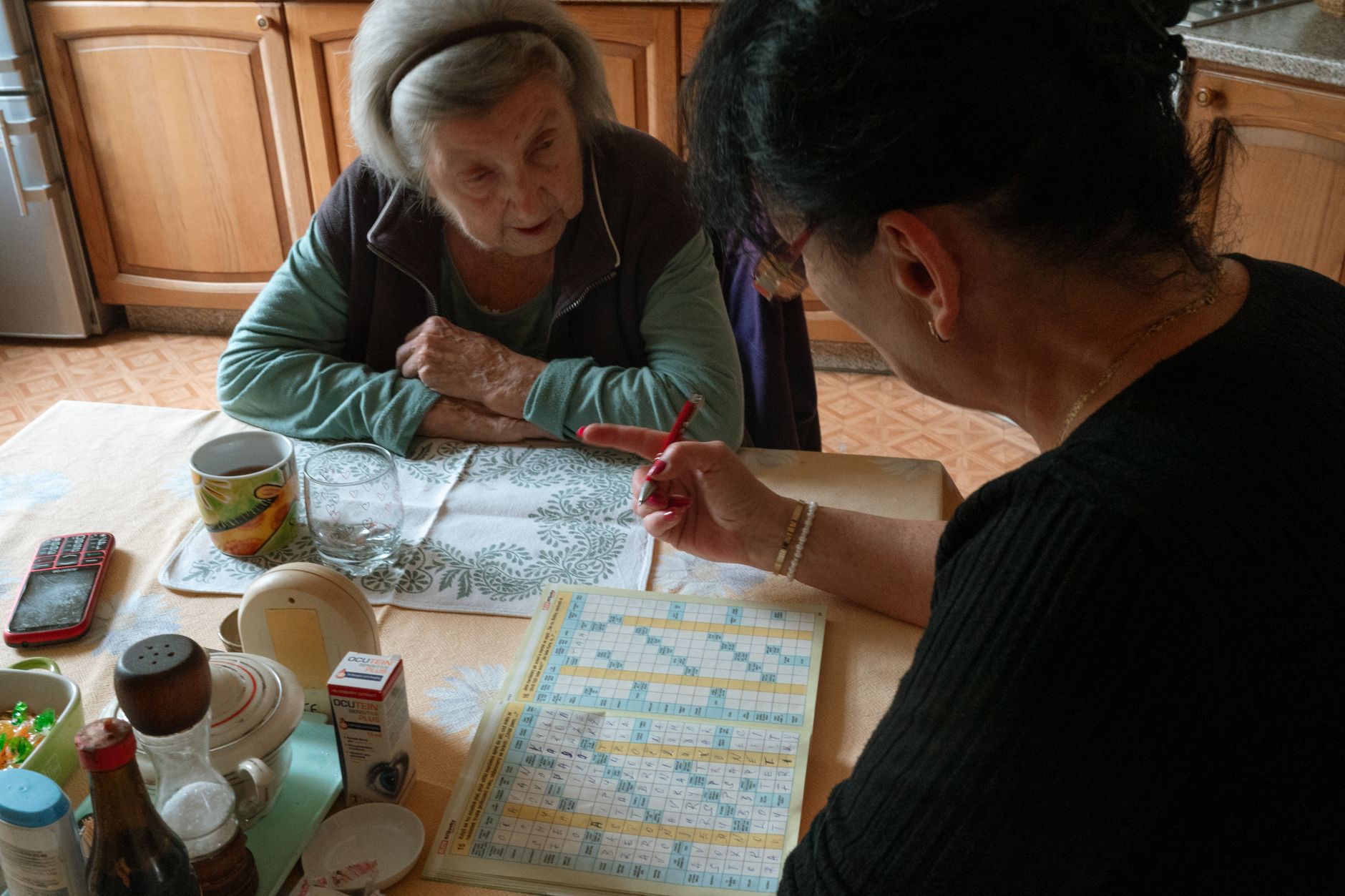
If you want to improve your crossword puzzle solving skills, the good news is that solving is a craft, not a talent. Every experienced solver started out staring blankly at a Thursday grid. What separates them from beginners isn't a bigger vocabulary. It's a set of habits built through deliberate practice over time.
Start with what you know, not what you don't
New solvers often move through a puzzle top-to-bottom, left-to-right, as though reading a page. That's one of the slowest approaches possible. Experienced solvers scan the entire grid first, pick out the clues they can answer immediately, and fill those in. Every confirmed letter becomes an anchor for the crosses around it.
Short answers deserve special attention. Three- and four-letter entries show up repeatedly across puzzles because constructors rely on a small pool of common short words. Learn entries like ERR, ORE, ALE, ERA, and ALOE, and you'll start recognising them on sight rather than working them out from scratch each time.
Fill in gimmes first. Then look at the crossing letters those answers have opened up and see which neighbouring clues suddenly become solvable. Work outward from your certainties, not into the dark.
Build your crossword vocabulary strategically
Crossword vocabulary isn't the same as everyday vocabulary. Puzzles have their own recurring words, phrases, and conventions. Some of them you'll never see in ordinary writing. Getting comfortable with crossword-specific language is one of the fastest ways to improve.
Abbreviations are a good place to start. Many clue writers signal an abbreviated answer by including an abbreviated word in the clue itself, but the conventions aren't always obvious. Knowing what clues like "org.", "abbr.", or "briefly" tell you about the expected answer form removes a category of confusion entirely. Common crossword abbreviations every solver should know is worth reviewing to get a grip on the most reliable ones.
Beyond abbreviations, pay attention to crossword-friendly letter combinations. Vowel-heavy words like OREO, ARIA, IOTA, and ETUI appear far more often than their real-world frequency would suggest. So do words ending in -ER, -EST, and -ATE. Train your eye to recognise them.
Read clues more carefully
Most solving errors come from reading the clue quickly and landing on the first interpretation that comes to mind. Crossword clues are precise. Every word is deliberate. A clue that reads "runs" could mean manages, operates, sprints, or scores in cricket. The part of speech of the answer always matches the part of speech signalled by the clue.
Pay attention to tense and number. A plural clue demands a plural answer. A past-tense clue signals a past-tense verb. These aren't incidental details. They're the constructor telling you exactly what form the answer takes.
Question marks at the end of a clue signal wordplay or a pun. That's your cue to stop thinking literally and look for a double meaning, a sound-alike, or a playful stretch of the word's usual sense. Clues without question marks are more likely to be straightforward definitions.
Solve a little every day
Consistency beats intensity. Solving one puzzle a day for a month does more for your skills than solving ten puzzles in a weekend once a month. Daily practice keeps patterns fresh in your memory, builds recognition speed, and exposes you to a wider range of constructors and styles.
Most major outlets publish puzzles at a consistent difficulty level across the week. The New York Times Crossword scales from easiest on Monday to hardest on Saturday, with Sunday sitting at a Thursday-level difficulty in a larger grid. Using that progression deliberately is smart training. Work Monday and Tuesday puzzles until they feel easy, then move to Wednesday. Don't jump to Saturday until Thursday feels comfortable.
If you want structured variety, daily crossword challenges to keep your brain sharp offers a range of formats that push different aspects of your solving ability.
Review your mistakes
Finishing a puzzle and moving on is natural. But the solvers who improve fastest are the ones who look back at their errors. When you check the solution after a failed grid, don't just absorb the correct answers. Ask why you got the clue wrong.
Common causes include misreading the tense, locking in an early wrong answer and refusing to revisit it, or not knowing a specific piece of trivia or vocabulary. Each type of error has a fix. Trivia gaps close with exposure over time. Structural errors, like holding onto a wrong crossing letter, close by learning to hold answers more loosely until the crosses confirm them.
Keep a mental note (or an actual one) of clue types that trip you up repeatedly. Geography clues? Roman numerals? Opera references? Knowing your weak spots lets you approach those clue categories more carefully rather than rushing past them with false confidence.
Try puzzles outside your comfort zone
Solving only the same puzzle source, at the same difficulty level, for months on end produces a narrow skill set. Different constructors favour different vocabulary, different theme types, and different cluing styles. Branching out forces adaptation.
Cryptic crosswords are worth trying even if you don't intend to become a cryptic solver. The discipline of parsing a clue into its definition and wordplay components sharpens how you read standard clues. The analytical habits carry across. If you haven't tried them, understanding common cryptic crossword mistakes and how to avoid them is a solid starting point before you tackle your first cryptic grid.
Themed puzzles from different eras of crossword history also reward exploration. Early 20th-century grids favoured different conventions than contemporary ones, and spending time with classic constructions trains pattern recognition you won't get from modern puzzles alone.
Use crossing letters, not just the clue
Every answer in a crossword connects to at least one crossing answer. That's the whole mechanic. Use it actively. When a clue stumps you completely, skip it and return once you have crossing letters from the down (or across) answers. Even two confirmed letters in a five-letter word often narrow the possibilities to a single answer.
If a crossing letter produces an answer that feels wrong, trust that feeling. Go back and question the cross. One incorrect answer in a grid cascades into a cluster of wrong letters that makes the surrounding clues unsolvable. Catching the wrong anchor early saves a lot of time.
Improving at crosswords is a compounding process. Each puzzle teaches you something, whether it's a new word, a new clue convention, or a small adjustment in how you read. The skills build on each other. Keep showing up.