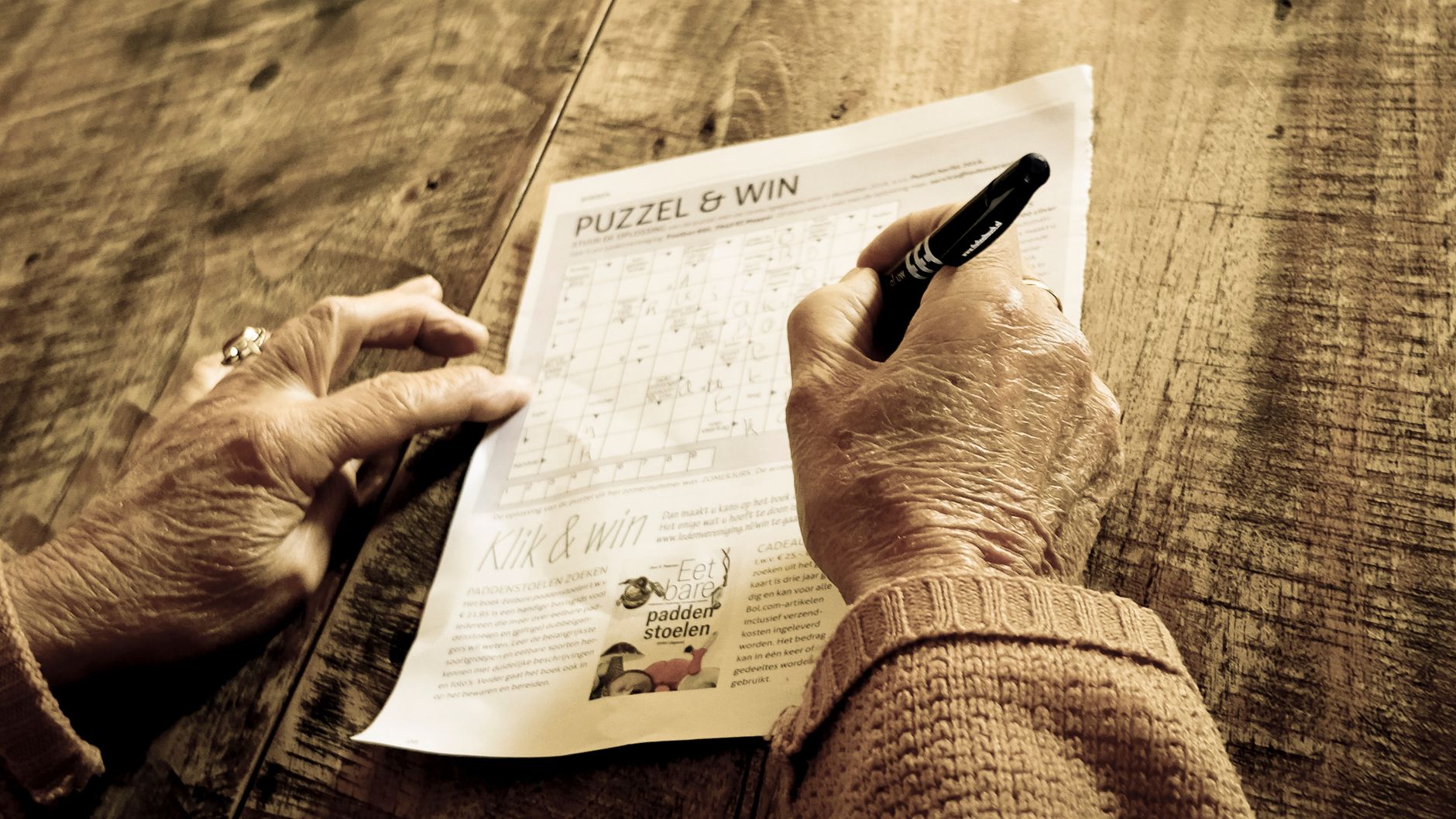
Common crossword abbreviations every solver should know sit at the intersection of trivia and pattern recognition. You can have a wide vocabulary and still stall on a four-letter answer that turns out to be an acronym for a government agency or a two-letter Latin tag. Getting comfortable with these short forms doesn't take long, and the payoff is immediate: abbreviated answers show up in virtually every grid, from Monday warm-ups to Saturday slogs.
Why crossword editors love abbreviations
Grid construction is a puzzle within a puzzle. Editors need fill that fits crossing letters cleanly, and short abbreviations solve a lot of geometric problems in tight corners. A three-letter answer like EST (established) or RET (retired) drops into a column that might otherwise be impossible to fill with a real word.
The convention is that the clue signals the abbreviation. Watch for these markers:
- The word "abbr." or "briefly" appears in the clue itself.
- The clue ends with a period, suggesting initials or a truncated form.
- The clue names a category that's almost always abbreviated: military rank, academic degree, state, agency, or time zone.
Once you know the signal, the guesswork shrinks fast. A clue that reads "Army rank, briefly" is not asking you to spell out "sergeant." It wants SGT.
The most useful abbreviations by category
Time and direction
These appear constantly. EST and PST (Eastern and Pacific Standard Time) fill corners across thousands of American grids. BCE and CE replaced BC and AD in many modern puzzles. AM and PM need no explanation, but EOD (end of day) and ETA (estimated time of arrival) show up more than you'd expect. For directions, NNE, SSW, and similar compass sub-divisions are crossword staples, partly because the double letters create helpful crossing hooks.
Titles and ranks
Military and academic titles are some of the richest sources of crossword abbreviations. GEN (General), COL (Colonel), SGT (Sergeant), and ENS (Ensign) all appear regularly. On the academic side, PhD, MBA, BA, and MA are grid fixtures. Medical titles follow the same logic: MD, RN, and DO (Doctor of Osteopathy) crop up whenever a constructor needs clean short fill.
US states
The two-letter postal codes are crossword gold. Every solver should have all 50 state codes memorised. The trickier ones editors reach for most: OR (Oregon), ME (Maine), IN (Indiana), and OH (Ohio). These look like common English words, which is exactly why editors love them. The clue will usually say something like "Buckeye State, on an envelope" to signal OH rather than a shouted expression of surprise.
Latin and foreign-language tags
Latin abbreviations have survived in crosswords long after they left everyday writing. Know these cold:
- ET AL. and its shorter form ETAL: "and others"
- ETC.: et cetera
- VIZ.: namely (from "videlicet")
- OPT.: opus, used in music clues
- NB: note well (nota bene)
- RE: regarding, also the second note of the musical scale
RE is a good example of an abbreviation that doubles as an answer in its own right, which is why context clues inside the clue matter so much. "Regarding, in a memo header" gets you RE the abbreviation. "Scale syllable" gets you RE the note.
Organisations and agencies
US government agencies and international bodies are a constructor's favourite shorthand. EPA, FDA, IRS, CIA, NSA, NATO, and UN fill grids at every difficulty level. Sports organisations add another layer: MLB, NBA, NFL, NHL, and MLS all appear regularly, usually with a clue like "Hoops org." or "Gridiron gp."
Abbreviations that double as real words
The trickiest category is abbreviations that look like normal words. Editors exploit this deliberately, especially in harder puzzles. ASS can clue "donkey," but it also abbreviates "assistant." TAN can be a colour or the abbreviation for tangent in a math clue. COT clues a small bed, but it's also an abbreviation in British English for "caught" in cricket scoring.
When you're stuck on a word that seems too obvious, consider whether the answer might be wearing a second hat. If solving difficult crossword clues has taught you anything, it's that the surface reading of a clue is almost never the whole story.
Abbreviations in cryptic crosswords
Standard crosswords signal abbreviations clearly. Cryptic crosswords weaponise them. In a cryptic clue, the abbreviation is often embedded inside a longer answer as a building block, indicated by a word like "quietly" (meaning PP, the musical dynamic), "note" (DO, RE, MI, FA, etc.), or "street" (ST). "Quietly revolutionary leader" might give you P + CHE = PCHE... and so on through the wordplay chain.
If you've started working through cryptic clue techniques like anagrams, hidden words, and charades, you'll already know that abbreviation components are one of the most common building blocks in that style of puzzle. Learning the standard indicator words for abbreviations speeds up cryptic solving noticeably.
Building your personal abbreviation list
The most practical thing you can do is keep a running list as you solve. Every time an abbreviated answer surprises you, write it down. After a month of daily solving, you'll have a personal cheat sheet built entirely from real puzzle data, which is more useful than any generic reference because it reflects the editors and outlets you actually read.
Puzzle databases like XWord Info let you search past New York Times grids by answer, so you can see exactly how often EST or NATO has appeared and what clue forms editors use. That kind of pattern recognition is what separates a solver who grinds through abbreviations from one who fills them in without breaking stride.
If you're still building your core solving skills, the beginner's guide to solving crossword puzzles covers how to approach a fresh grid before you even get to the question of abbreviations. Abbreviation fluency is a layer on top of that foundation, not a replacement for it.
Quick reference: 20 crossword abbreviations worth memorising first
If you want a starting point, these 20 appear across American crosswords more reliably than almost any others:
- EST, PST, CST, MST (time zones)
- GEN, COL, SGT, ENS (military ranks)
- EPA, IRS, CIA, FDA (US agencies)
- BA, MA, PhD, MD (degrees and titles)
- ET AL., ETC., RE, NB (Latin tags)
- OR, ME, IN, OH (tricky state codes)
Commit those to memory and you'll stop losing time on the fill that editors reach for first when a grid corner gets tight. Twenty abbreviations won't cover everything. But they'll cover the answers that appear again and again, and that's exactly where reliable speed comes from.